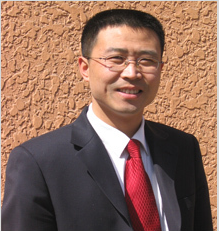
杨晓松
/Upload/202603/1772892448.jpg

基本情况

杨晓松,1998年毕业于中国科技大学, 获基础数学专业理学博士学位。自1991年起,在武汉工程大学、重庆邮电大学,厦门大学任教。现为华中科技大学“华中学者”特聘教授、博士生导师。曾任第八届中国自动化学会控制理论专业委员会委员,中国工业与应用数学学会理事。曾担任国际杂志〈Interdisciplinary Sciences〉编委、《控制理论与应用》和《Journal of Control theory and Applications》两刊名誉编委,主要从事微分动力系统及非光滑系统理论及其应用,理论生态学,几何控制论、生物运动和机器人基础理论等研究,主持和参与国家自然科学基金项目多项。

教育背景  

1995年9月-1998年7月 中国科学技术大学数学系攻读博士学位(拓扑学与微分几何),1998 年获理学博士学位。

1988年9月-1991年7月 (自学考取)华中师范大学硕士研究生,1991 年获运筹学与控制论硕士学位。

工作经历

2004年3月-至今  华中科技大学特聘教授,曾担任电路与系统博士生导师及控制理论与控制工程博士生导师,现在为数学与统计学院基础数学及运筹学与控制论博士生导师。

2002年8月-2004年3月 厦门大学教授,控制理论与控制工程博士生导师,自动控制技术研究所所长。

1998年7月-2002年8月 重庆邮电大学工作,任光电工程学院副院长,重庆邮电大学非线性系统研究所所长,先后为重庆邮电大学副教授和特聘教授。

1991年6月-1995年8月 武汉化工学院,讲师。

一些访问经历:

曾在 中科院应用数学研究所、清华大学数学系、北京大学数学研究所、南开大学陈省身数学研究所、复旦大学数学系、  香港城市大学电子工程系、台湾理论研究中心(交通大学,中央研究院)、美国芝加哥伊利诺伊斯理工学院数学系、 加拿大滑铁卢大学电子工程系、西安大略大学数学系、俄国圣彼得堡大学数学和力学学院、德国哥廷根大学数学系等进行访问和交流。

研究方向

1、动力系统理论、微分拓扑及应用

2、理论生态学

3、机器人的几何与拓扑理论。

科研成果 

在《Nonlinearity》、 《Chaos》、《Discrete and Continuous Dynamical Systems A》、 《Int. J. Bifurcation and Chaos 》、《J. Phys. A: Math. Gen》、《Nonlinear Analysis》、《Systems & Control Letters》、《Electronic Letters》、《IEEE CAS-I》、《Biosystems》等发表学术论文多篇,其中SCI收录论文百余篇,SCI他引千余次。发表学术著作3部。

部分论文和著作

动力系统理论及应用

1. Xiao-Song Yang, Index sums of isolated singular points of positive vector fields, Discrete and Continuous Dynamical System –A, 25(3), 1033–1039, 2009.

2.  Songmei Huan and Xiao-Song Yang*,The number of limit cycle in general planar piecewise linear systems,Discrete and Continuous Dynamical System –A,32(2012), 2147-2164.

3. Xiao-Song Yang, Estimate of topological entropy of N-buffer switched networks, Nonlinearity,18(2005) 263-275. 

4. Xiao-Song Yang* and Suochun Zhang, On possibility of creating new asymptotically stable periodic orbits in continuous time dynamical systems by small feedback control, Nonlinearity,  16(2003), 1853-1959. 

5. Xiao-Song Yang,Qingdu Li,, A horseshoe in a cellular neural network of 4-dimensional autonomous ordinary differential equations, Int. J. Bifurcation and Chaos, 17(2007), 3211-3218

6. Xiao-Song Yang, Topological horseshoes and computer assisted verification of chaotic dynamics,Int. J. Bifurcation and Chaos,19 (2009) 1127–1145

7. Qingdu Li, Xiao-Song Yang , Chaotic dynamics in a class of 3D Glass networks, Chaos 16(3), 033101 (2006)5 pages,

8. Xiao-Song Yang, Yan Huang, Complex dynamics in simple Hopfield neural networks  Chaos  16(2006) Article Number: 033114  DOI: 10.1063/1.2220476  

9. Songmei Huan and Xiao-Song Yang*,Generalized Hopf bifurcation in a class of planar switched systems,Dynamical Systems Vol. 26, No. 4, December 2011, 433–445

10. Xiao-Song Yang et al, A planar topological horseshoe theory with applications to computer verifications of chaos, J. Phys. A: Math. Gen. 38 (2005) 4175–4185

11. Qingdu Li, Xiao-Song Yang , A computer-assisted verification of hyperchaos in the Saito hysteresis chaos generator, J. Phys. A: Math. Gen. 39 (2006) 9139-9150.

12. Xiao-Song Yang, On existence of subharmonic orbits in Hamiltonian systems, Bulletin of Polish Academy of Science Vol. 48, No.2 (2000), 221-225.

13. Song-Mei Huan, Xiao-Song Yang∗,Existence of limit cycles in general planar piecewise linear systems of saddle–saddle dynamics,Nonlinear Analysis 92 (2013) 82–96

14. Zhai Shidong,Yang Xiao-Song*,Contraction analysis of synchronization of complex switched networks with different innercoupling matrices,Journal of the Franklin Institute, 350(2013), 3116–3127

15. Songmei Huan, Qingdu Li, Xiao-Song Yang ,Chaos in three-dimensional hybrid systems and design of chaos generators, Nonlinear Dyn.  (2012) 69:1915–1927

16. Yang, X.-S., Tang, Y.: Horseshoes in piecewise continuous maps. Chaos, Solitons & Fractals 19(4), 841–845 (2004)


生物运动和机器人学

1. Qingdu Li, and Xiao-Song Yang*,New walking dynamics in the simplest passive bipedal walking model , Applied Mathematical Modelling, 36 (2012) 5262–5271

2. Qingdu Li, Song Tang, and Xiao-song Yang∗,New bifurcations in the simplest passive walking model,Chaos: An Interdisciplinary Journal of Nonlinear Science 23, 043110 (2013); doi: 10.1063/1.4824975

3. Qingdu Li, Jianli Guo, and Xiao-Song Yang ,  Bifurcation and chaos in the simple passive dynamic walking model with upper body, Chaos: An Interdisciplinary Journal of Nonlinear Science 24, 033114 (2014); doi: 10.1063/1.4890834


混沌电路设计

1. X.S. Yang and Q. Li, Chaos generator via Wien-bridge oscillator, Electronic Letters Vol. 38,  2002, pp.623-625. 

2. Qingdu Li, Xiao-Song Yang*, A new multiple-scrolls chaotic attractor and its circuit implementation,  Electronic Letters, 39(2003), 1306-1307.


微分几何: 

S S Yang (X.-S Yang), Isometric immersion of compact Riemannian manifold into En+m with mean curvature pinched, Publ. Math. Debrecen 52/1-2 (1998), 79-83. 


代数拓扑与应用:

1. Xiao-Song Yang, Topology of singular fiber bundles, Expo. Math 17(1999), 275-282. 

2. Xiao-Song Yang, On topological classification of singular fiber bundles with 2-D base space, Expos. Math., 17(1999), 359-364

3. Xiao-Song Yang, On coincidences of continuous maps, Nonlinear Analysis, 50(2002) 913-918. 


微分拓扑应用:

1. Xiao-Song Yang,An Index Theory for Positive Dynamical Systems with an Application to Lotka–Voterra Systems,Qual. Theory Dyn. Syst. 12(2013),305–314

2. Xiao-Song Yang, Index sums of isolated singular points of positive vector fields, Discrete and Continuous Dynamical System –A, 25(3), 1033–1039, 2009.

3. Xiao-Song Yang, Construction of smooth sphere maps with given degrees and a generalization of Morse index formula, Qual. Theory Dyn. Syst. (2015) 14:139–147


著作

1. 杨晓松,《Hamilton系统的拓扑理论》(中国科技大学出版社,2000,合肥)。

2. 杨晓松,李清都《混沌系统与混沌电路》(科学出版社,2007,北京)

3. 杨晓松,《数学控制论基础》(科学出版社,2012,北京)

欢迎访问东方智库

会员登录 | 免费注册

讲师入驻通道

免费咨询热线:13810808675

热门搜索:部委学者  |  经济学家  |  培训课程  |  周延礼  |  蒋昌建  |  
首页 > 知名专家 > 高校教授 > 查看详情
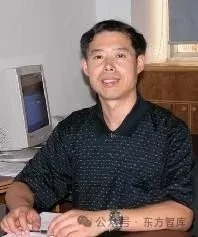
杨晓松
杨晓松  
基本情况杨晓松,1998年毕业于中国科技大学,获基础数学专业理学博士学位。自1991年起,在武汉工程大学、重庆邮电大学,厦门大学任教。现为华中科技大学“华中学者”特聘教授、博士生导师。曾任第八届中国自动化学会控制理论专业委员会委员,中国工业与应用数学学会理事。曾担任国际杂志〈InterdisciplinarySciences〉编委、《控制理论与应用》和《JournalofControltheory...
  • 联系方式:
  • 手机号码:
  • 联系邮箱:
  • 微信扫码联系

    微信咨询

邀请费用:面议

邀请讲课
官方电话:13810808675
http://www.zgdfzk.com/index.php/gxjs/120331.html
详细介绍

基本情况

杨晓松,1998年毕业于中国科技大学, 获基础数学专业理学博士学位。自1991年起,在武汉工程大学、重庆邮电大学,厦门大学任教。现为华中科技大学“华中学者”特聘教授、博士生导师。曾任第八届中国自动化学会控制理论专业委员会委员,中国工业与应用数学学会理事。曾担任国际杂志〈Interdisciplinary Sciences〉编委、《控制理论与应用》和《Journal of Control theory and Applications》两刊名誉编委,主要从事微分动力系统及非光滑系统理论及其应用,理论生态学,几何控制论、生物运动和机器人基础理论等研究,主持和参与国家自然科学基金项目多项。

教育背景  

1995年9月-1998年7月 中国科学技术大学数学系攻读博士学位(拓扑学与微分几何),1998 年获理学博士学位。

1988年9月-1991年7月 (自学考取)华中师范大学硕士研究生,1991 年获运筹学与控制论硕士学位。

工作经历

2004年3月-至今  华中科技大学特聘教授,曾担任电路与系统博士生导师及控制理论与控制工程博士生导师,现在为数学与统计学院基础数学及运筹学与控制论博士生导师。

2002年8月-2004年3月 厦门大学教授,控制理论与控制工程博士生导师,自动控制技术研究所所长。

1998年7月-2002年8月 重庆邮电大学工作,任光电工程学院副院长,重庆邮电大学非线性系统研究所所长,先后为重庆邮电大学副教授和特聘教授。

1991年6月-1995年8月 武汉化工学院,讲师。

一些访问经历:

曾在 中科院应用数学研究所、清华大学数学系、北京大学数学研究所、南开大学陈省身数学研究所、复旦大学数学系、  香港城市大学电子工程系、台湾理论研究中心(交通大学,中央研究院)、美国芝加哥伊利诺伊斯理工学院数学系、 加拿大滑铁卢大学电子工程系、西安大略大学数学系、俄国圣彼得堡大学数学和力学学院、德国哥廷根大学数学系等进行访问和交流。

研究方向

1、动力系统理论、微分拓扑及应用

2、理论生态学

3、机器人的几何与拓扑理论。

科研成果 

在《Nonlinearity》、 《Chaos》、《Discrete and Continuous Dynamical Systems A》、 《Int. J. Bifurcation and Chaos 》、《J. Phys. A: Math. Gen》、《Nonlinear Analysis》、《Systems & Control Letters》、《Electronic Letters》、《IEEE CAS-I》、《Biosystems》等发表学术论文多篇,其中SCI收录论文百余篇,SCI他引千余次。发表学术著作3部。

部分论文和著作

动力系统理论及应用

1. Xiao-Song Yang, Index sums of isolated singular points of positive vector fields, Discrete and Continuous Dynamical System –A, 25(3), 1033–1039, 2009.

2.  Songmei Huan and Xiao-Song Yang*,The number of limit cycle in general planar piecewise linear systems,Discrete and Continuous Dynamical System –A,32(2012), 2147-2164.

3. Xiao-Song Yang, Estimate of topological entropy of N-buffer switched networks, Nonlinearity,18(2005) 263-275. 

4. Xiao-Song Yang* and Suochun Zhang, On possibility of creating new asymptotically stable periodic orbits in continuous time dynamical systems by small feedback control, Nonlinearity,  16(2003), 1853-1959. 

5. Xiao-Song Yang,Qingdu Li,, A horseshoe in a cellular neural network of 4-dimensional autonomous ordinary differential equations, Int. J. Bifurcation and Chaos, 17(2007), 3211-3218

6. Xiao-Song Yang, Topological horseshoes and computer assisted verification of chaotic dynamics,Int. J. Bifurcation and Chaos,19 (2009) 1127–1145

7. Qingdu Li, Xiao-Song Yang , Chaotic dynamics in a class of 3D Glass networks, Chaos 16(3), 033101 (2006)5 pages,

8. Xiao-Song Yang, Yan Huang, Complex dynamics in simple Hopfield neural networks  Chaos  16(2006) Article Number: 033114  DOI: 10.1063/1.2220476  

9. Songmei Huan and Xiao-Song Yang*,Generalized Hopf bifurcation in a class of planar switched systems,Dynamical Systems Vol. 26, No. 4, December 2011, 433–445

10. Xiao-Song Yang et al, A planar topological horseshoe theory with applications to computer verifications of chaos, J. Phys. A: Math. Gen. 38 (2005) 4175–4185

11. Qingdu Li, Xiao-Song Yang , A computer-assisted verification of hyperchaos in the Saito hysteresis chaos generator, J. Phys. A: Math. Gen. 39 (2006) 9139-9150.

12. Xiao-Song Yang, On existence of subharmonic orbits in Hamiltonian systems, Bulletin of Polish Academy of Science Vol. 48, No.2 (2000), 221-225.

13. Song-Mei Huan, Xiao-Song Yang∗,Existence of limit cycles in general planar piecewise linear systems of saddle–saddle dynamics,Nonlinear Analysis 92 (2013) 82–96

14. Zhai Shidong,Yang Xiao-Song*,Contraction analysis of synchronization of complex switched networks with different innercoupling matrices,Journal of the Franklin Institute, 350(2013), 3116–3127

15. Songmei Huan, Qingdu Li, Xiao-Song Yang ,Chaos in three-dimensional hybrid systems and design of chaos generators, Nonlinear Dyn.  (2012) 69:1915–1927

16. Yang, X.-S., Tang, Y.: Horseshoes in piecewise continuous maps. Chaos, Solitons & Fractals 19(4), 841–845 (2004)


生物运动和机器人学

1. Qingdu Li, and Xiao-Song Yang*,New walking dynamics in the simplest passive bipedal walking model , Applied Mathematical Modelling, 36 (2012) 5262–5271

2. Qingdu Li, Song Tang, and Xiao-song Yang∗,New bifurcations in the simplest passive walking model,Chaos: An Interdisciplinary Journal of Nonlinear Science 23, 043110 (2013); doi: 10.1063/1.4824975

3. Qingdu Li, Jianli Guo, and Xiao-Song Yang ,  Bifurcation and chaos in the simple passive dynamic walking model with upper body, Chaos: An Interdisciplinary Journal of Nonlinear Science 24, 033114 (2014); doi: 10.1063/1.4890834


混沌电路设计

1. X.S. Yang and Q. Li, Chaos generator via Wien-bridge oscillator, Electronic Letters Vol. 38,  2002, pp.623-625. 

2. Qingdu Li, Xiao-Song Yang*, A new multiple-scrolls chaotic attractor and its circuit implementation,  Electronic Letters, 39(2003), 1306-1307.


微分几何: 

S S Yang (X.-S Yang), Isometric immersion of compact Riemannian manifold into En+m with mean curvature pinched, Publ. Math. Debrecen 52/1-2 (1998), 79-83. 


代数拓扑与应用:

1. Xiao-Song Yang, Topology of singular fiber bundles, Expo. Math 17(1999), 275-282. 

2. Xiao-Song Yang, On topological classification of singular fiber bundles with 2-D base space, Expos. Math., 17(1999), 359-364

3. Xiao-Song Yang, On coincidences of continuous maps, Nonlinear Analysis, 50(2002) 913-918. 


微分拓扑应用:

1. Xiao-Song Yang,An Index Theory for Positive Dynamical Systems with an Application to Lotka–Voterra Systems,Qual. Theory Dyn. Syst. 12(2013),305–314

2. Xiao-Song Yang, Index sums of isolated singular points of positive vector fields, Discrete and Continuous Dynamical System –A, 25(3), 1033–1039, 2009.

3. Xiao-Song Yang, Construction of smooth sphere maps with given degrees and a generalization of Morse index formula, Qual. Theory Dyn. Syst. (2015) 14:139–147


著作

1. 杨晓松,《Hamilton系统的拓扑理论》(中国科技大学出版社,2000,合肥)。

2. 杨晓松,李清都《混沌系统与混沌电路》(科学出版社,2007,北京)

3. 杨晓松,《数学控制论基础》(科学出版社,2012,北京)


上一篇:殷朝阳

下一篇:杨俊锋

快速发布需求
重新获取验证码

推荐讲师

  • 于际敬
    著名心理学专家
  • 金灿荣
    中国人民大学国际关系学院副院长
  • 王吉鹏
    著名管理学者,集团管控专家
  • 李佐军
    国务院发展研究中心资源与环境政策研究所副所长,资源与环境专家
  • 辛鸣
    中共中央党校教授、博士生导师

专家动态

联系我们
微信咨询
微信咨询
微信扫一扫